All Categories
Featured
Locating Affordable Delaware Solar Panel Installation Com...
Vital Details On Delaware Solar Panel Installation Companies
Ways To Verify Delaware Solar Panel Installation Companie...
Navigating Maryland Solar Panel Installation Companies Fo...

Avoiding Pitfalls With Pennsylvania Solar Panel Installation Companies
Table of Contents
- – Understanding Pennsylvania Solar Panel Installa...
- – Calculating The Payback Period For Pennsylvani...
- – How To Assess The Efficiency Of Your Pennsylva...
- – Is The $7,000–$18,000 Battery Storage Add-On C...
- – Preparing Your Roof For Pennsylvania Solar Pan...
- – How You Can Correctly Measure Your 85–100% Ann...
Understanding Pennsylvania Solar Panel Installation Companies Before You Purchase
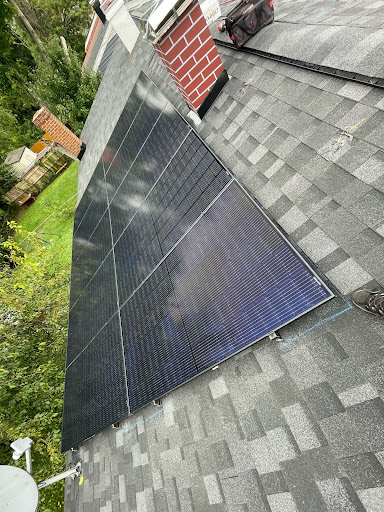
When you start researching Pennsylvania Solar Panel Installation Companies, you are essentially assessing how a technical service provider will convert your roof into a dependable power generation asset. Because the cost per watt in Pennsylvania totals approximately $2.58, you must understand how equipment quality, structural integrity, and local ordinances affect the long-term value of your investment. You require to locate an installer who weighs the technical needs of your site with the monetary constraints of state-specific incentives and NEM policies. By mastering the mechanics behind system sizing and warranty coverage, you gain the capability to discern between high-performing installations and those that may fail to meet your energy goals. This article provides the essential knowledge required to explore the marketplace and choose a competent professional to manage your project.
“Federal tax credit covers 30% of installation costs through end of current year.” — Lumina Solar PA
Calculating The Payback Period For Pennsylvania Solar Panel Installation
The recoupment period for a residential PV installation is the duration required for your cumulative energy savings to neutralize your total upfront investment, a timeline that typically spans eight to twelve years for most Pennsylvania homeowners. When evaluating Pennsylvania-based solar panel installation companies to consider, you must recognize that this timeframe is not fixed; it fluctuates based on how your system engages with local utility rates and the specific amount of energy generated relative to your consumption.
“The average solar panel payback period in Pennsylvania is around 10 years, but any time between 8 and 14 years is considered normal.” — ecowatch.com
Several mechanical and environmental factors determine how quickly your system reaches the break-even point:
- System Efficiency: Higher annual production from ideal roof alignment lowers the time needed to recoup costs.
- Utility Rate Structures: Because utility buyback credits your excess generation at the full retail rate, your savings increase faster if your local utility charges higher per-kilowatt-hour prices.
- Incentive Integration: Annual income produced from the solar credit market efficiently accelerates your return on investment by providing a steady cash flow.
- Initial Capital Outlay: Systems that incorporate a backup battery increase your upfront cost by $7,000 to $18,000, which inherently extends the payback period unless you prioritize energy security over short-term financial returns.
Determine your expected payback period by dividing your total net cost—after accounting for all applicable rebates and anticipated SREC certificate revenue—by your projected annual electricity savings. Request a detailed performance estimate from your installer that specifically considers your home's unique shading profile and local utility rate data to guarantee your payback projection reflects real local conditions.
When evaluating solar system installation, you should first conduct a roof solar suitability assessment to calculate your system sizing, as systems are typically engineered to offset 85 to 100 percent of your annual electricity consumption based on local sun hours. To comprehend the economics, determine your solar payback period by factoring in the average price per watt of $2.58 alongside potential revenue from solar renewable energy credits, which currently provide $250 to $480 in annual income. You should consult Solar Panel Installation to find a licensed solar contractor with NABCEP license who offers a comprehensive workmanship warranty, as this guarantees your investment is protected while you navigate financing options like a solar loan, a solar equipment lease, or a power purchase agreement. Since incorporating a battery backup system can increase your total project cost by $7,000 to $18,000, you must carefully weigh these expenses against the long-term grid independence provided by net metering and the specific solar incentives Pennsylvania offers to lower your total solar panel price.
How To Assess The Efficiency Of Your Pennsylvania Solar Panel Installation Company
You verify the technical proficiency of Pennsylvania solar panel installation companies and what they offer by prioritizing those that hold a valid NABCEP accreditation. This designation serves as the industry benchmark for proficiency, confirming that a solar vendor has mastered the complex technical specifications for photovoltaic system design, electrical safety, and site-specific installation standards. Because solar system installation involves integrating high-voltage electrical components with your home's structural integrity, vetting the exact credentials of the technicians executing the work is essential to ensure long-term system performance and safety.
“Any solar company doing residential work over $5,000 must register with the Office of the Attorney General as a Home Improvement Contractor (HIC) under 73 P.S. §517.1 et seq.” — facebook.com
Beyond this primary credential, you should assess an installer based on their capacity to manage the entire project lifecycle. A qualified technician does more than install hardware; they navigate the complex regulatory landscape required to bring your system online. Use the following criteria to differentiate between potential service providers:
- Technical Certification: Verification of active NABCEP license for the lead technician on your project.
- Permitting Proficiency: Proven history of handling local zoning, electrical permitting, and utility interconnection documentation.
- Site-Specific Engineering: The ability to plan a layout that accounts for local climate conditions, such as roof pitch and shading, to maximize output.
- Structural Integrity Oversight: Verified techniques for sealing roof penetrations to prevent water damage over the 25-year lifespan of the equipment.
Before signing a contract, request a list of three recent local projects and verify that the installer carries active, up-to-date liability and workers' compensation insurance.
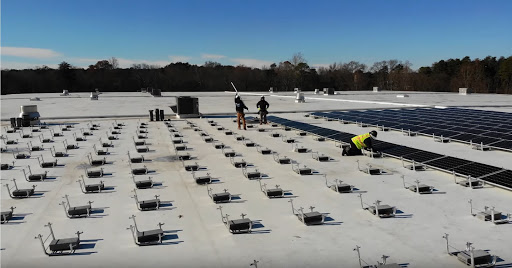
Is The $7,000–$18,000 Battery Storage Add-On Cost Part Of Your Solar Panel Installation?
A $7,000–$18,000 battery storage add-on cost represents the financial investment required to integrate energy storage hardware into your Pennsylvania solar system installation. This investment functions by capturing excess electricity generated during daily sunlight hours, allowing you to use that power during the evening or to keep essential circuits when the grid experiences an outage. When assessing Pennsylvania-based solar panel installation companies to consider, you should acknowledge that the specific price within this range depends significantly on the storage capacity and the chemical composition of the battery units chosen for your home.
“Pennsylvania's new GRID Standards may push data center developers toward cleaner backup power, and battery energy storage systems (BESS) are emerging as a viable alternative to diesel generators.” — hh-law.com
The decision to integrate a battery storage system entails weighing specific performance compromises against your household energy goals:
| Feature | Standard Solar Only | Solar with Battery Storage |
|---|---|---|
| Grid Independence | Minimal | High (during outages) |
| Evening Usage | Purchased from grid | Stored solar energy |
| Project Complexity | Lower | Higher |
Beyond the upfront monetary impact, you must also weigh the physical requirements of a battery system, including the need for a climate-controlled installation space and specialized electrical integration. Not every solar installer provides the same array of battery technologies, so it is vital to confirm that your chosen provider has documented experience with the particular chemistry, such as lithium iron phosphate, that perfectly suits your expected discharge cycles. Confirm whether your desired battery unit supports whole-home backup or is limited to a sub-panel of critical loads before finalizing your equipment list.
Preparing Your Roof For Pennsylvania Solar Panel Installation Companies
Your property is prepared for solar system installation when your roof’s structural characteristics can maximize exposure to available sunlight, which is why you must evaluate your site before hiring Who are the top solar panel installation companies in Pennsylvania? The performance of your hardware depends on the geometry of your roof and the presence of external obstructions that block light. In the local climate, a south-facing roof area provides the most reliable energy generation, though east and west orientations remain feasible options for many homeowners.
“Installation shall include a pre-engineered ballasted or mounting structure with attachments both designed for a wind load of 90 miles per hour (mph).” — codes.iccsafe.org
To ascertain if your home is a candidate for a high-performance system, consider these critical site factors:
- Orientation: A true south-facing roof captures the most consistent daily solar energy.
- Pitch: A roof incline between 15 and 40 degrees optimizes the angle of incidence for sunlight.
- Shading: Nearby trees, chimneys, or neighboring structures generate shadows that substantially reduce total annual output.
- Structural Integrity: Your roof must be in sound condition, as the structural load capacity must bear the weight of the hardware and withstand local weather stresses.
Beyond these variables, you should evaluate the age of your roofing material. Because a solar setup is designed to last for decades, installing modules on a roof that needs replacement in the near future will result in needless removal and reinstallation costs. Confirm the residual lifespan of your shingles or metal roofing before finalizing your project design.
Request a professional site survey from your selected installer to map your roof's precise shading patterns throughout the different seasons.
How You Can Correctly Measure Your 85–100% Annual Usage Offset Target
An 85–100% yearly usage offset goal is the calculated objective for sizing a system to offset the overwhelming bulk of your yearly electricity usage using solar power. When you begin looking for and Finding reputable solar panel installation companies in Pennsylvania, they will initially examine your last twelve months of utility statements to determine your baseline energy demand. This data is then verified with local daily sunlight hours to guarantee the proposed array can generate enough kilowatt-hours to satisfy your specific household needs.
“Where net metering is one-for-one at retail — Pennsylvania, New Jersey, Virginia, Maine — sizing to 100% of annual usage is defensible, because an exported kilowatt-hour and a consumed one are worth the same.” — solaramerica.io
Numerous technical limitations affect the ultimate capacity of your solar system installation:
- Available Roof Surface: The entire square footage of unshaded, south-facing roof area limits the number of panels you can actually mount.
- Net Energy Metering Policies: Regulations often cap the maximum system size allowed based on your historical annual usage, preventing oversized arrays that send excessive power to the grid.
- Energy Efficiency: Reducing your base load through home upgrades can enable for a smaller, more economical system to reach your offset target.
If you are planning your installation, use the following table to comprehend how consumption data determines sizing requirements:
| Annual Usage (kWh) | Typical System Size (kW) | Estimated Offset |
|---|---|---|
| 8,000 | 5.0 | ~85% |
| 15,000 | 9.5 | ~95% |
| 20,000 | 12.87 | ~100% |
Ask for a thorough production estimate from your solar company that accounts for your specific roof orientation and local shading factors before determining your system capacity.

Table of Contents
- – Understanding Pennsylvania Solar Panel Installa...
- – Calculating The Payback Period For Pennsylvani...
- – How To Assess The Efficiency Of Your Pennsylva...
- – Is The $7,000–$18,000 Battery Storage Add-On C...
- – Preparing Your Roof For Pennsylvania Solar Pan...
- – How You Can Correctly Measure Your 85–100% Ann...
Latest Posts
Locating Affordable Delaware Solar Panel Installation Companies For You
Vital Details On Delaware Solar Panel Installation Companies
Ways To Verify Delaware Solar Panel Installation Companies Before Signing
More
Latest Posts
Locating Affordable Delaware Solar Panel Installation Companies For You
Vital Details On Delaware Solar Panel Installation Companies
Ways To Verify Delaware Solar Panel Installation Companies Before Signing